How Do You Know If Your Child Has a Bite Problem? A Jersey City Parent’s Guide
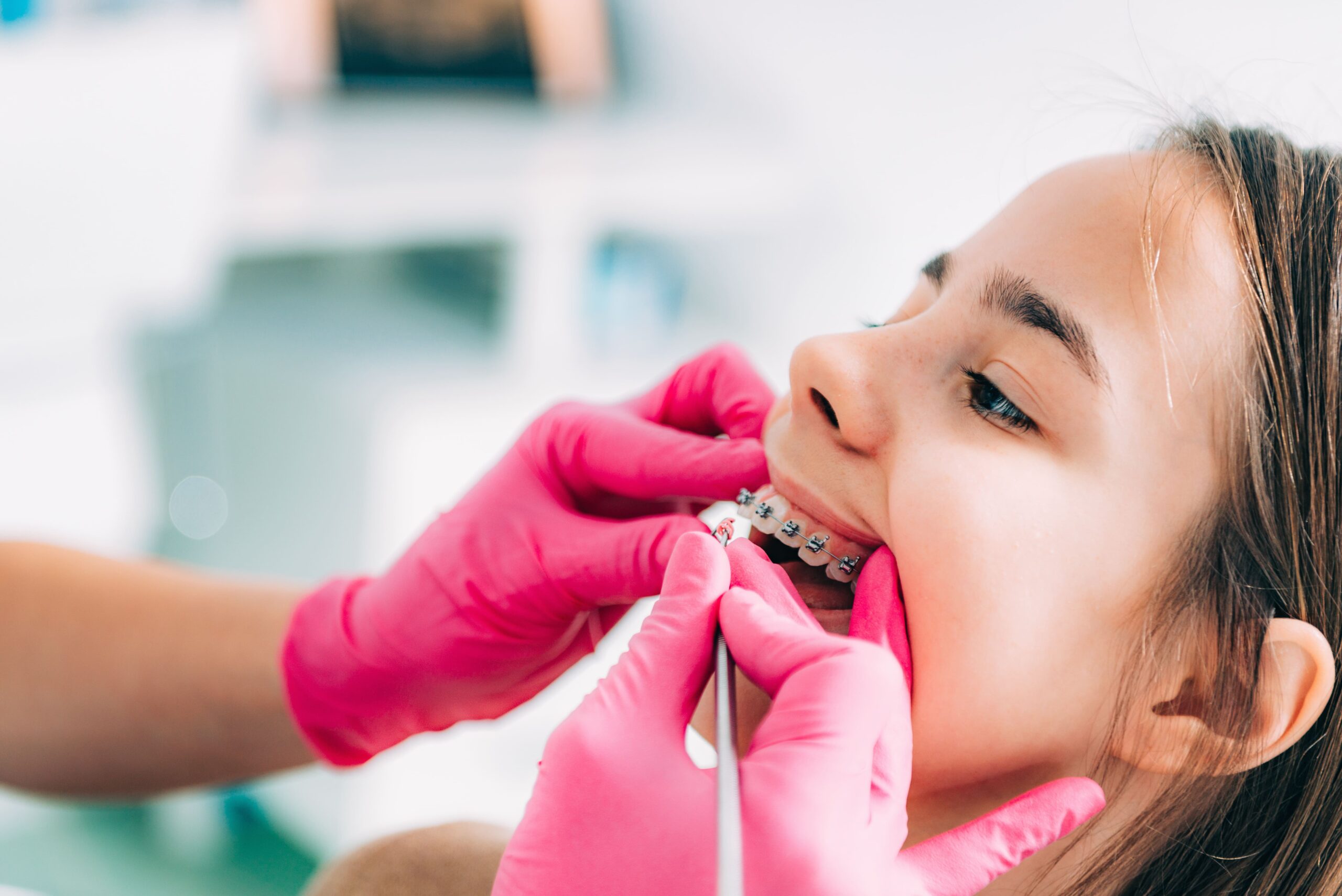
When your child smiles, you may notice crooked teeth or spaces, but some orthodontic problems are harder to spot. A child can have teeth that look relatively straight while the upper and lower jaws are not fitting together properly.
A bite problem, also called a malocclusion, describes an issue with how the teeth meet when the mouth is closed. Some problems are obvious, while others become easier to recognize as a child grows. Knowing what to watch for can help parents decide when it may be time for an orthodontic evaluation.
What Does a Healthy Bite Look Like?
There is some natural variation in how children’s teeth develop, so a bite does not have to look perfectly symmetrical to be healthy. Ideally, the upper and lower teeth should work together comfortably when your child bites and chews.
Problems can occur when the teeth overlap too much, do not overlap enough, or meet in an unusual position. An overbite, underbite, crossbite, and open bite are common examples.
The position of the jaws matters, too. Sometimes the teeth themselves are not the primary concern. Differences in jaw growth can affect how the teeth come together and may become more noticeable as your child gets older.
Signs Your Child May Have a Bite Problem
One of the easiest clues to notice is the way your child’s teeth come together. Ask them to gently close their mouth and look at the front and back teeth. Do the teeth meet evenly, or does it appear that some teeth are sitting inside, outside, or significantly ahead of others?
You may also notice that your child’s lower jaw shifts to one side when they close their mouth. A jaw that consistently moves to find a comfortable bite can be a sign that the teeth are not fitting together correctly.
Difficulty biting or chewing is another reason to pay attention. Children may avoid certain foods, chew primarily on one side, or complain that biting into food feels uncomfortable. According to the American Association of Orthodontists, difficulty chewing or biting can be a sign that an orthodontic problem needs evaluation.
Other signs can include frequent cheek biting, protruding front teeth, excessive spacing or crowding, or teeth that appear blocked from coming in normally.
Watch How Your Child’s Teeth Are Developing
Baby teeth play an important role in guiding permanent teeth into position. Losing them significantly earlier or later than expected can sometimes affect how the permanent teeth develop.
Crowding is another common concern. If there does not appear to be enough room for permanent teeth, you may see teeth coming in at unusual angles, overlapping one another, or remaining partially hidden.
You may also notice a noticeable gap between the upper and lower front teeth when your child bites down. This can be a sign of an open bite. On the other hand, if the lower front teeth sit significantly ahead of the upper teeth, your child may have an underbite.
These issues are not always easy for parents to identify, which is one reason an orthodontic evaluation can be useful even when there does not appear to be a major problem.
Mouth Breathing and Oral Habits Can Be Worth Discussing
Certain habits and behaviors can influence dental and facial development. Thumb or finger sucking, for example, can affect the position of the teeth and the development of the bite when the habit continues over time.
Mouth breathing is another concern parents may notice. It does not automatically mean that a child has an orthodontic problem, but persistent mouth breathing is worth discussing with a dental or medical professional so the underlying cause can be considered.
The AAO also lists habits such as thumb-sucking, along with abnormal tooth contact and other developmental concerns, among signs that may warrant orthodontic attention.
Does My Child Need Braces Right Away?
Not necessarily. One of the biggest misconceptions about an early orthodontic evaluation is that it automatically means starting braces.
In many cases, an orthodontist may recommend monitoring your child’s growth and dental development rather than beginning treatment immediately. The ideal timing depends on the specific problem and your child’s stage of development.
Some children may benefit from early orthodontic treatment while they are still growing. Other children may simply need periodic evaluations until more permanent teeth have erupted.
The American Association of Orthodontists recommends that children have their first orthodontic check-up no later than age 7. This does not mean every seven-year-old needs braces. Instead, an early examination gives a pediatric orthodontist an opportunity to identify developing bite problems and determine whether treatment is appropriate now, later, or not at all.
Why Early Evaluation Can Matter
Timing can be particularly important for certain orthodontic conditions. While a child is still growing, an orthodontist may have opportunities to guide jaw development, address certain crossbites, create room for developing permanent teeth, or correct problematic oral habits.
That does not mean earlier treatment is always better. The goal is to treat a problem at the right time for that particular child.
An orthodontist can evaluate the teeth, jaws, facial development, and bite to determine whether your child needs treatment. Diagnostic images may also help identify teeth that have not erupted normally or other issues that cannot be seen just by looking at the smile.
What Happens During a Child’s Orthodontic Evaluation?
A first visit is generally about understanding how your child’s teeth and jaws are developing. The orthodontist will examine the bite and look for signs of crowding, spacing, abnormal tooth eruption, or jaw misalignment.
You will also have an opportunity to ask questions about your child’s development. If treatment is not necessary yet, you may receive guidance about what to watch for and when your child should return.
If treatment is recommended, the orthodontist can explain the available options and why a particular approach may be appropriate. Depending on your child’s needs, treatment could involve braces, clear aligners, early orthodontic treatment, or simply continued observation.
Give Your Child’s Smile a Strong Start With Urban Orthodontics
You do not have to wait until your child’s teeth are noticeably crooked to ask whether their bite is developing properly. Changes in the way your child chews, the position of the jaws, unusual tooth eruption, crowding, or an abnormal bite can all be reasons to schedule an evaluation.
If you’re looking for a Jersey City orthodontist, Urban Orthodontics provides orthodontic care for children, teens, and adults, with locations serving Union City, Jersey City, and Bayonne. An evaluation can give you a clearer understanding of your child’s developing smile and whether treatment is needed now or in the future.